Knowledge for your business
Guides, cases and insights on restaurant business automation from the Posimos team
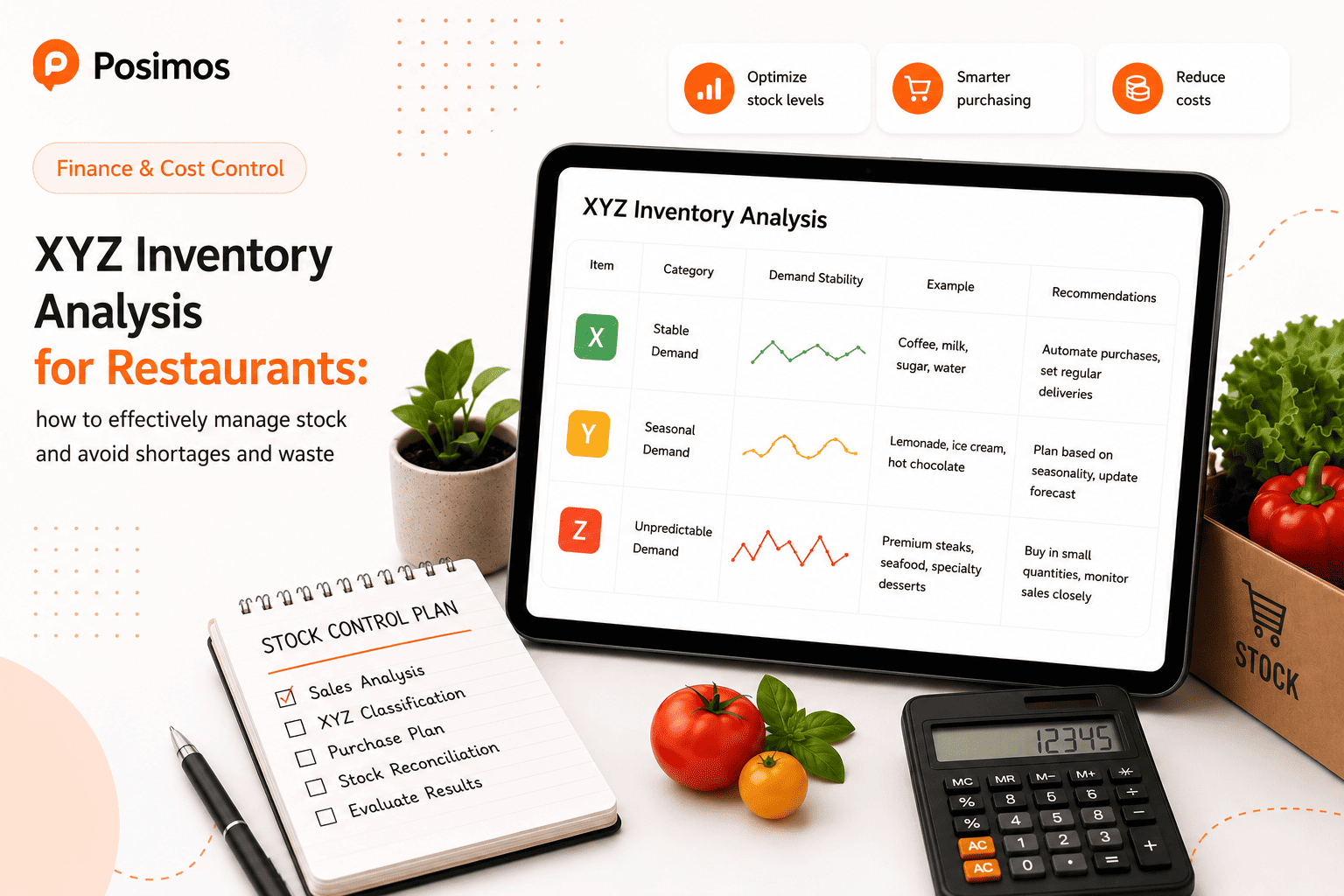
Inventory analysis in restaurants: how to optimize stock management and prevent product shortages
Efficient inventory management is one of the foundations of a successful restaurant. It's not enough to simply know what's in stock—you also need to understand how products are consumed over time. In many restaurants, some ingredients run out during peak service, while others remain on the shelves until they expire, creating unnecessary waste and financial losses. This is where **XYZ inventory analysis** becomes a valuable management tool. It helps classify products based on the consistency of their demand, allowing restaurant owners to improve purchasing decisions, reduce waste, and maintain optimal stock levels. In this article, you'll learn what XYZ analysis is, how it works, and how it can help your restaurant operate more efficiently.
Denis
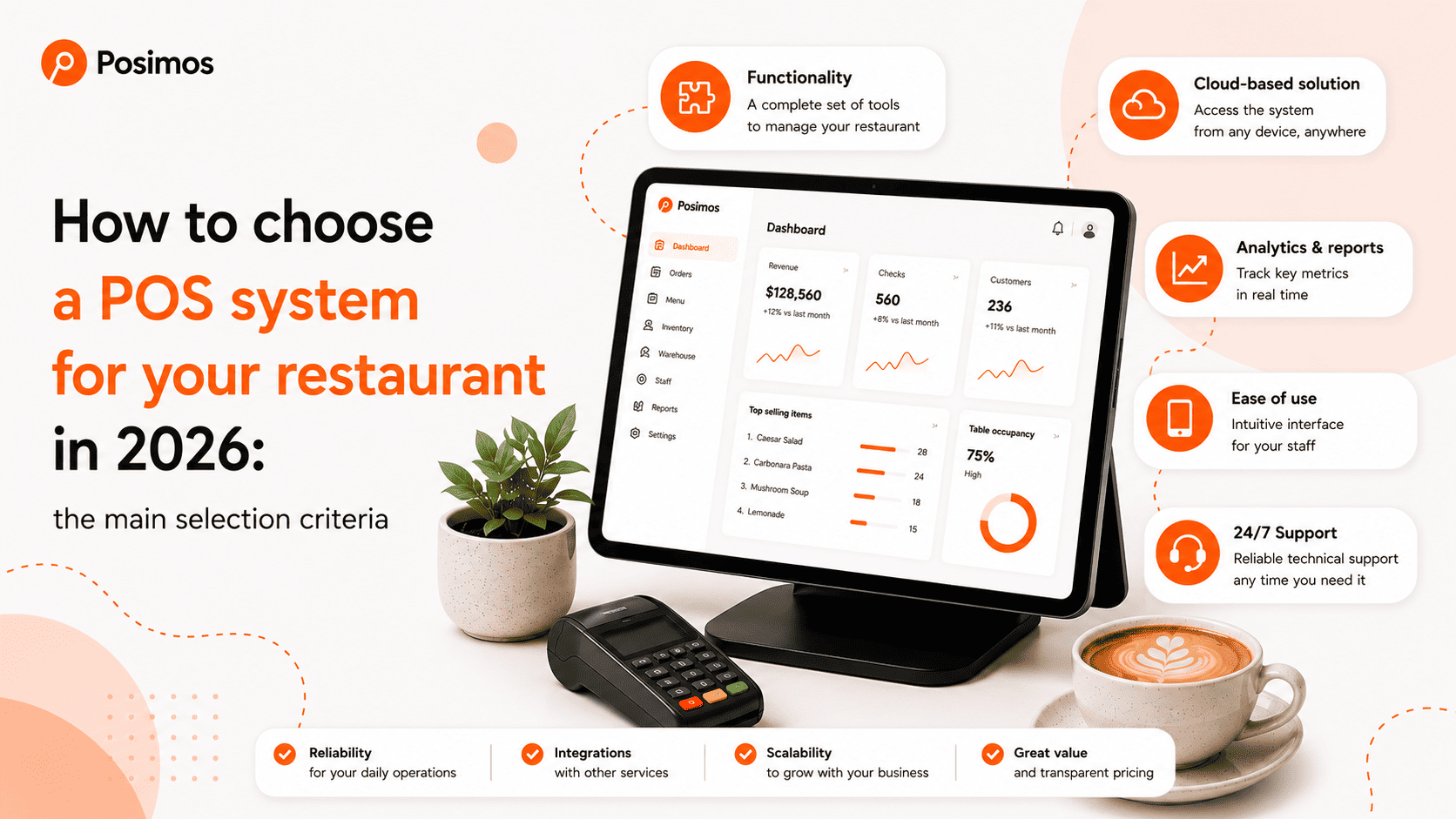
How to choose a POS system for your restaurant in 2026: Key selection criteria
Choosing a POS system is one of the most important decisions for any restaurant. A modern POS system is no longer just a tool for taking orders and processing payments. It helps manage inventory, monitor staff performance, analyze sales, and improve overall business efficiency. With so many solutions available on the market, finding the right one can be challenging. In this article, we'll cover the key factors to consider when choosing a restaurant POS system in 2026.
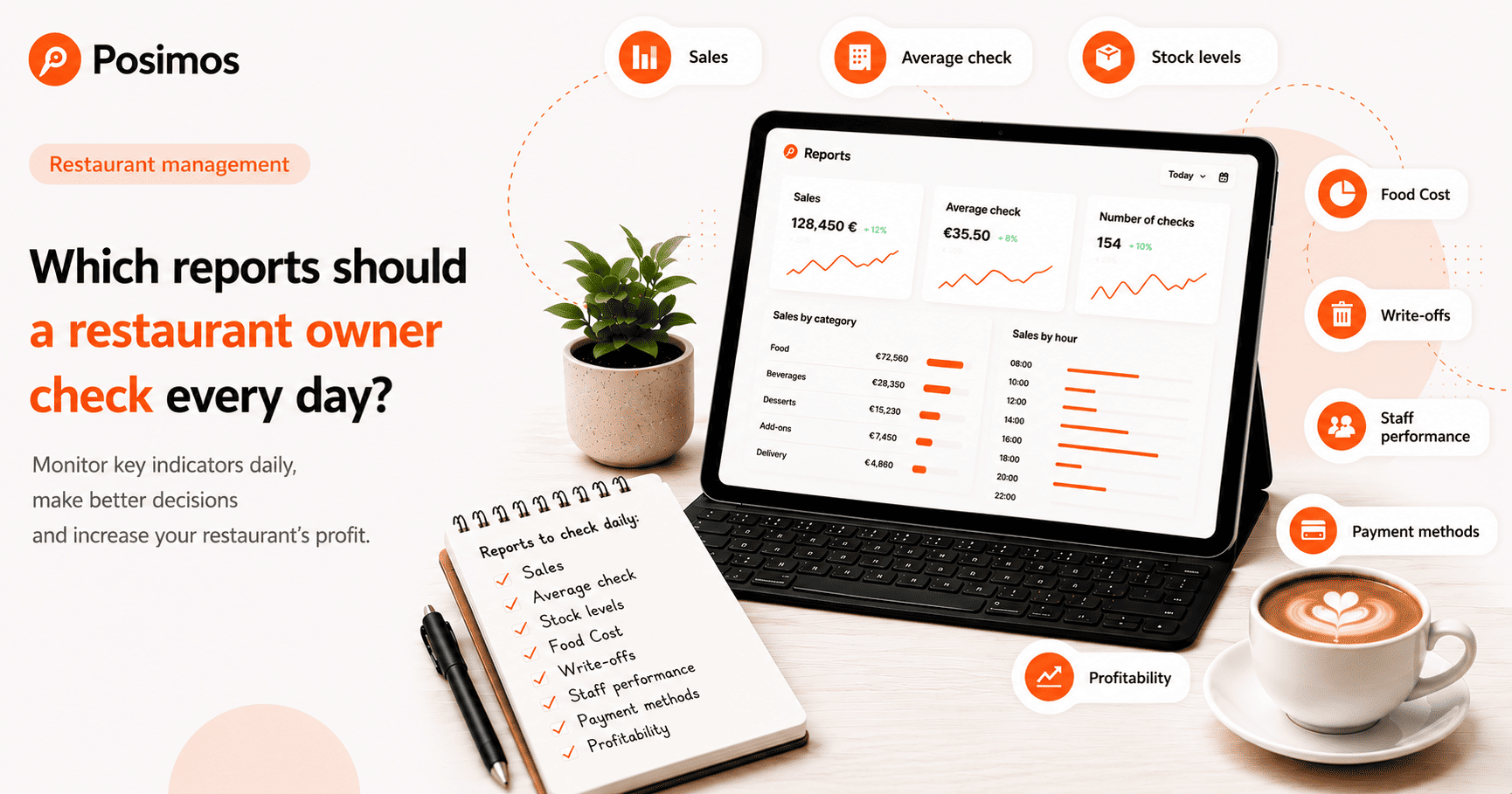
Which reports should a restaurant owner review every day?
Running a restaurant based only on intuition is one of the most common reasons businesses lose money. A busy dining room does not always mean the restaurant is profitable or operating efficiently. Every day, your restaurant generates valuable data that can reveal how the business is performing, whether expenses are under control, how productive your staff is, and if your inventory is being managed correctly. Successful restaurant owners don't start their day by checking the cash register—they begin by reviewing key business reports. These reports help identify potential issues early, allowing you to make informed decisions before small problems become costly ones. In this article, we'll explore the most important reports every restaurant owner should review daily and explain why each of them matters.
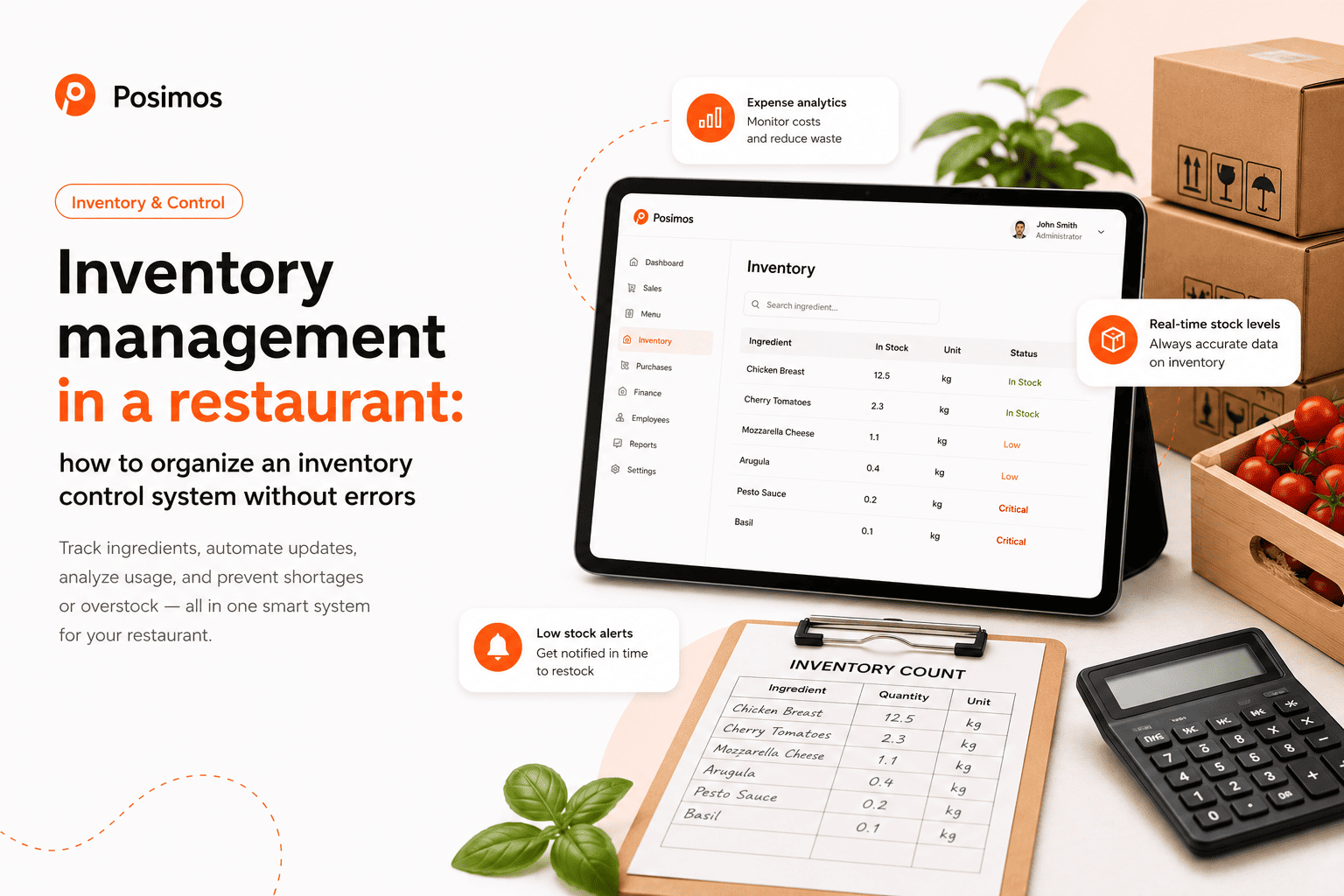
Restaurant inventory management: how to build an efficient stock control system
Effective inventory management is one of the key foundations of a profitable restaurant. Even if your business enjoys steady customer traffic and strong sales, poor inventory control can lead to significant financial losses. Overstocking, food waste, unnecessary write-offs, and discrepancies found during stock counts all have a direct impact on your bottom line. In this article, you'll learn what restaurant inventory management is, why it matters, the essential processes involved, common mistakes to avoid, and how automation can help you manage your stock more efficiently.
10 Restaurant processes you should automate today
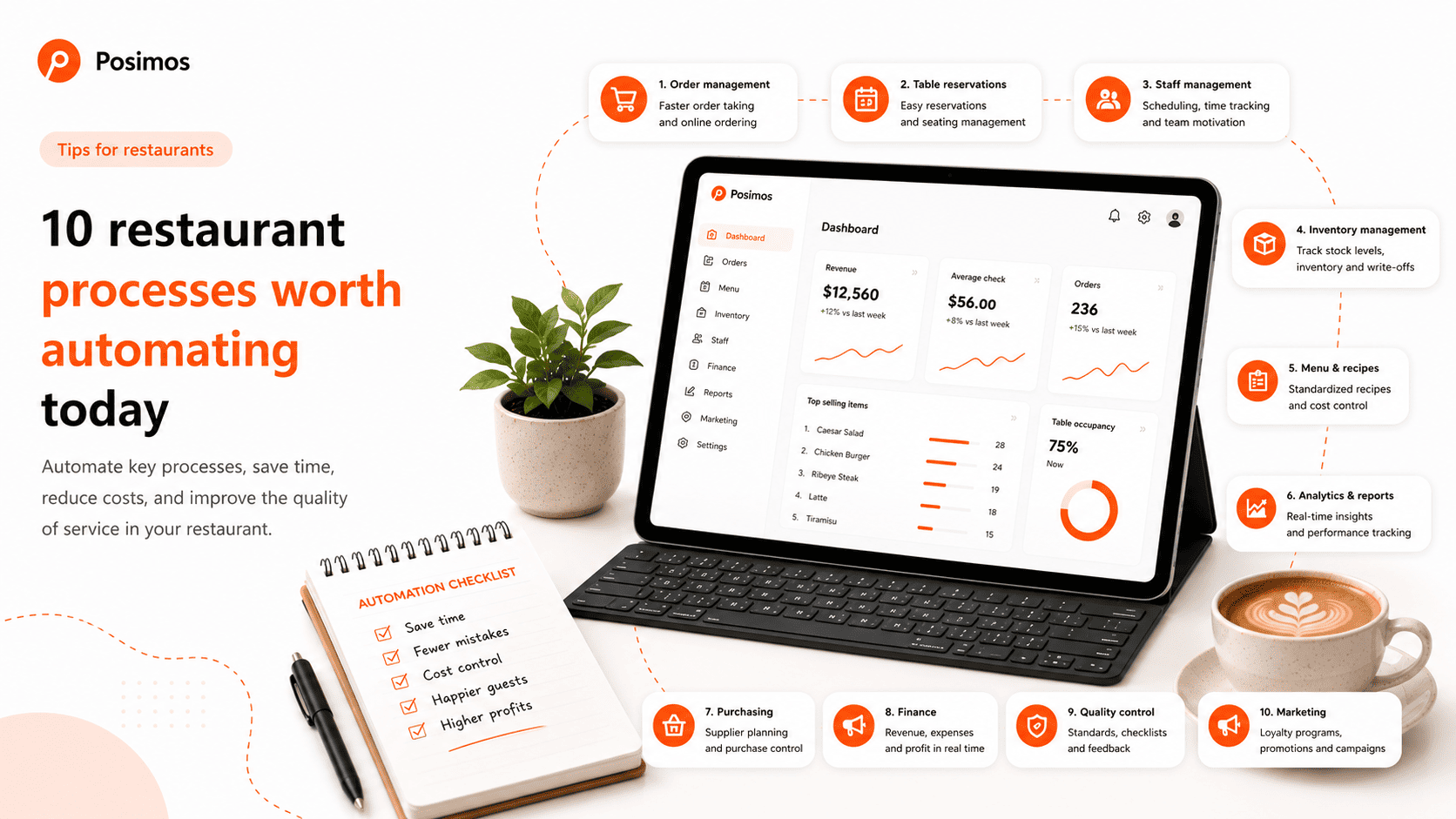
Running a successful restaurant today requires much more than serving great food. Every day, restaurant owners and managers handle dozens of operational tasks, from taking orders and managing inventory to coordinating staff, processing payments, and analyzing sales performance. When these tasks are handled manually, they consume valuable time and increase the risk of costly mistakes. That's why **restaurant automation** has become an essential part of modern restaurant management. By automating daily operations, restaurants can improve efficiency, reduce operational costs, deliver better customer experiences, and make smarter business decisions based on real-time data. In this article, we'll explore ten key restaurant processes that every modern restaurant, café, or food service business should automate.
How to automate a restaurant: a complete guide for modern food businesses
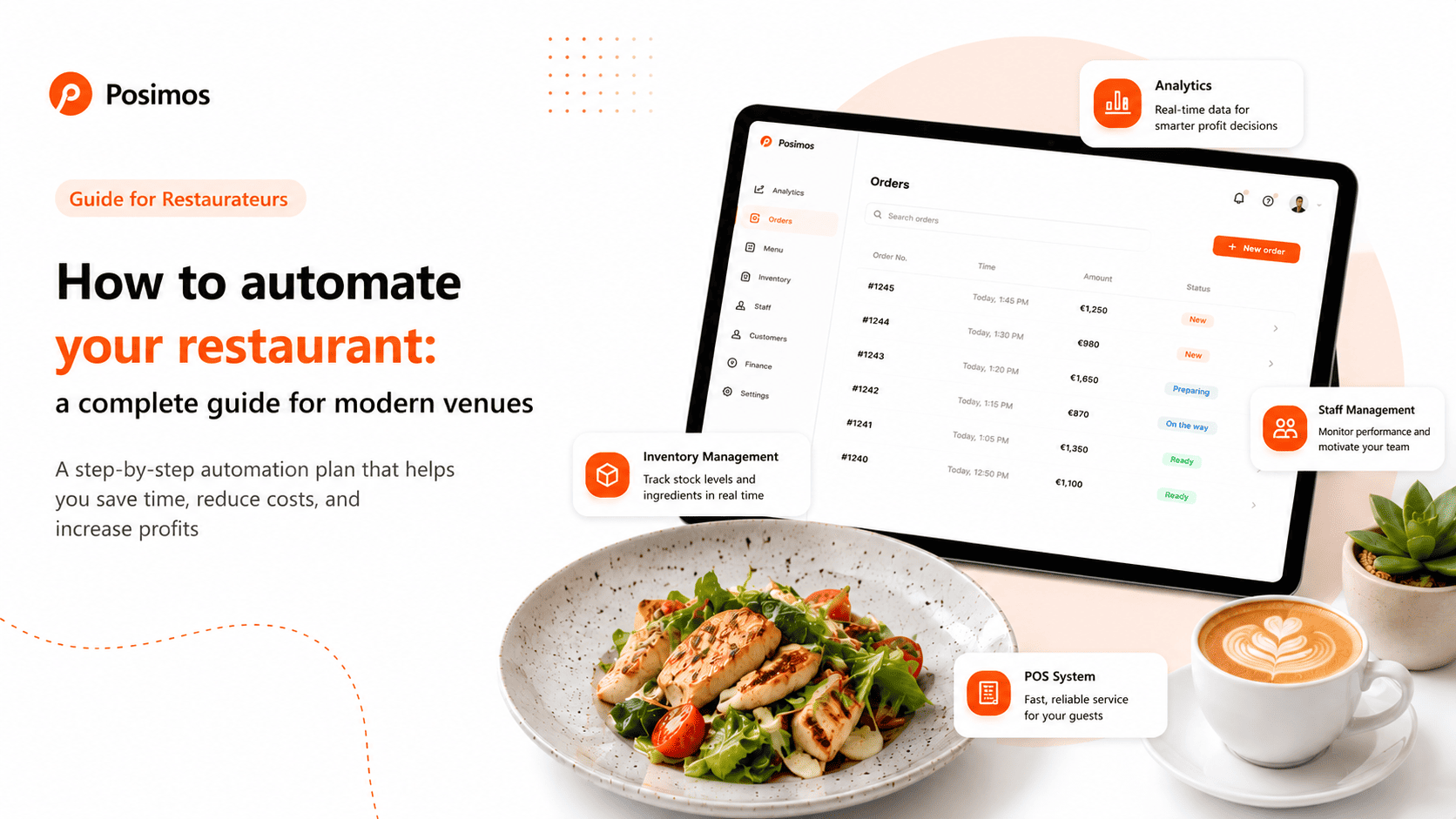
Learn how to automate your restaurant, café, or coffee shop with a POS system. Discover the benefits of inventory management, QR menus, staff control, purchasing automation, and real-time analytics.
How to optimize restaurant purchasing and avoid tying up money in Inventory
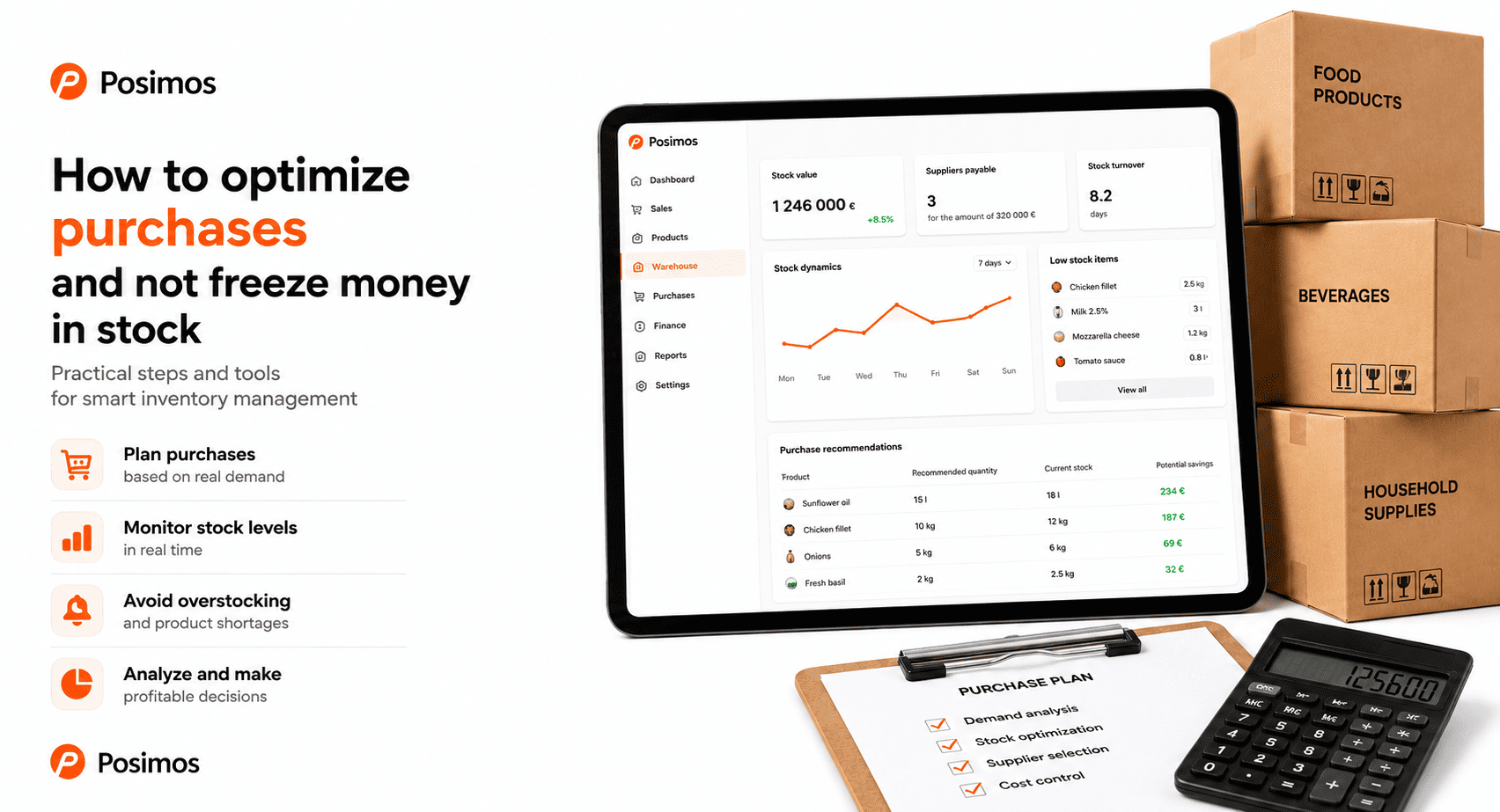
Purchasing ingredients is one of the largest expenses for any restaurant. However, the biggest problem is often not the prices charged by suppliers but poor inventory planning. Ordering more products than necessary ties up valuable cash in storage, while some ingredients spoil before they are ever used. Optimizing your purchasing process helps reduce costs, improve cash flow, minimize food waste, and create a more efficient restaurant operation. In this article, you'll learn how to organize purchasing so your money supports business growth instead of sitting idle on warehouse shelves.
How to Manage Your Staff Without Being Constantly Present at Your Restaurant
Many restaurant, café, and coffee shop owners face the same challenge: the moment they leave the business for a few hours—or even a day—they feel like they're losing control. Are employees following procedures? Are sales being recorded correctly? Is inventory being handled properly? Are customers still receiving the same level of service? The truth is that successful restaurant management should not depend on the owner's constant presence. A well-organized business continues to operate efficiently because its processes—not its owner—keep everything running. In this article, we'll explore how to build a reliable staff management system that allows you to stay in control without micromanaging every shift.
How to conduct restaurant inventory correctly: a step-by-step Guide
Inventory management is one of the most important processes in running a successful restaurant. It helps you control stock levels, identify shortages, prevent theft, and accurately calculate food costs. Many restaurant owners perform inventory only when problems arise. In reality, regular inventory counts help prevent financial losses and maintain healthy profitability.
Why does a restaurant have high revenue but low Ppofit? 7 main reasons
High revenue often creates the impression of a successful business. However, many restaurant owners face a situation where the dining room is full, sales are growing, but at the end of the month, net profit is much lower than expected. The reason is simple: **revenue and profit are not the same thing**. Without proper cost control, even a restaurant generating significant revenue may struggle to achieve healthy profitability.