What Is XYZ Analysis?
XYZ analysis is an inventory management method that categorizes products according to the stability and predictability of their consumption.
Unlike ABC analysis, which focuses on the financial importance of products, XYZ analysis answers a different question:
How accurately can we predict the future demand for a particular product?
The more predictable the demand, the easier it becomes to plan purchases and maintain optimal inventory levels.
Why Is XYZ Analysis Important for Restaurants?
Without a structured inventory strategy, restaurants often face problems such as:
- Running out of essential ingredients during service.
- Overstocking products with low demand.
- Tying up cash in unnecessary inventory.
- High food waste due to expired products.
- Inefficient purchasing decisions.
- Difficulties in planning menus and supplier orders.
XYZ analysis helps solve these issues by making inventory management more data-driven and predictable.
How Does XYZ Analysis Work?
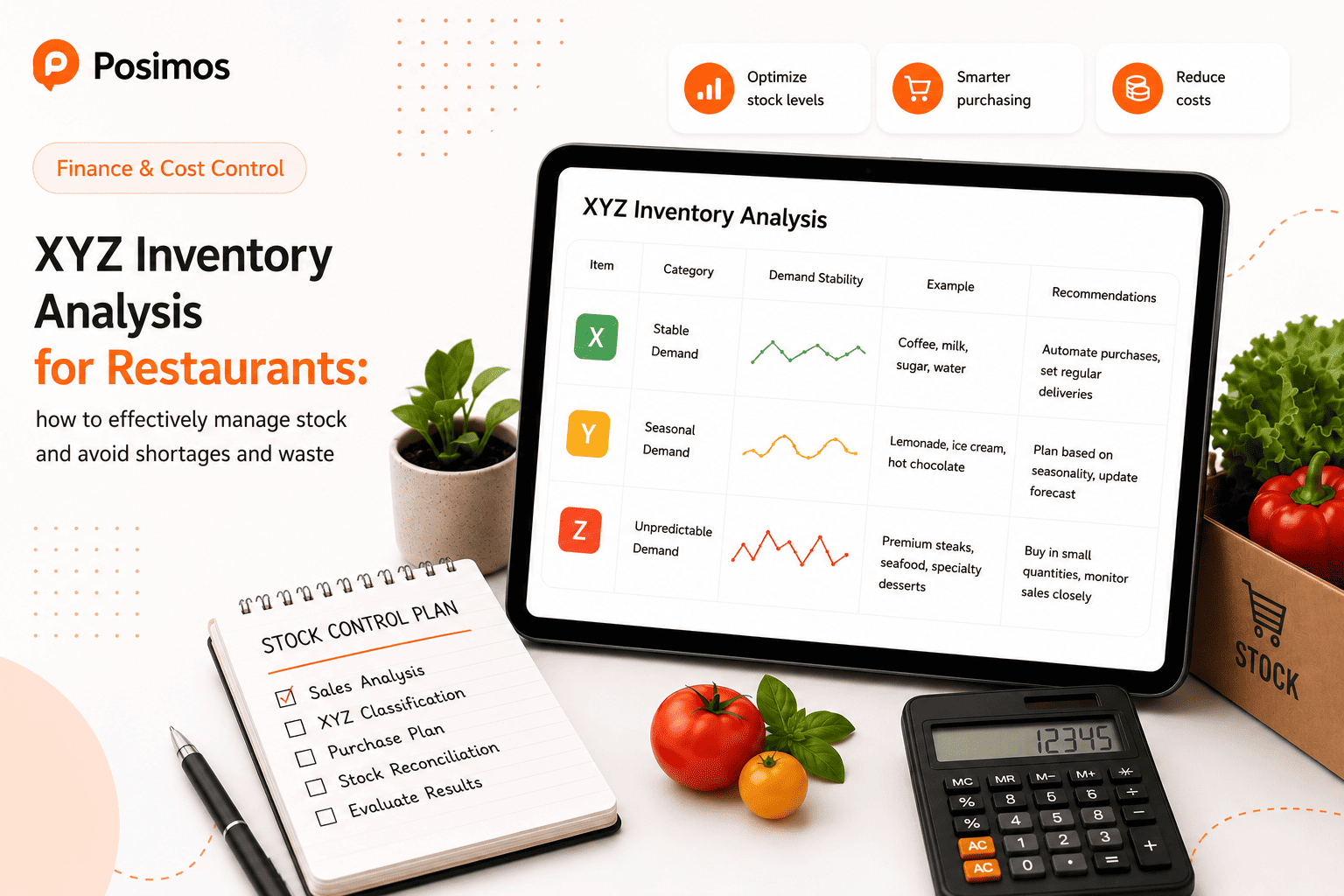
Products are divided into three categories based on the stability of their consumption.
Category X
These are products with stable and predictable demand.
Examples include:
- Coffee
- Milk
- Sugar
- Bottled water
- Potatoes
- Chicken breast
These ingredients are used almost every day in similar quantities, making them easy to forecast and replenish.
Category Y
These products have seasonal or fluctuating demand.
Examples include:
- Lemonades
- Ice cream
- Hot chocolate
- Pumpkin-flavored dishes
- Summer cocktails
Their demand depends on factors such as:
- Seasons
- Weather conditions
- Holidays
- Weekends
- Marketing campaigns
Purchasing plans for these products should be reviewed regularly.
Category Z
These are products with highly unpredictable demand.
Examples include:
- Premium steaks
- Fine wines
- Fresh seafood
- Seasonal specialties
- Limited-edition desserts
Sales of these items can vary significantly from week to week, making them the most challenging products to manage.
How to Classify Products
The classification is based on historical sales data.
For example:
| Product | Sales Pattern |
|---|---|
| Coffee | Consistent daily sales |
| Homemade lemonade | High demand during summer |
| Wagyu steak | Occasional sales |
Classification:
- Coffee → X
- Lemonade → Y
- Wagyu steak → Z
How XYZ Analysis Helps Reduce Costs
Many restaurants purchase all products using the same approach.
This often leads to unnecessary expenses.
For example:
Milk can be ordered regularly in larger quantities because demand is stable.
On the other hand, premium seafood or expensive cuts of meat should be purchased based on expected demand or customer reservations.
The result is:
- Lower food waste
- Reduced inventory costs
- Fewer emergency purchases
- Better cash flow management
How to Manage Each Category
Category X Products
Recommended practices include:
- Automated purchasing
- Setting minimum stock levels
- Scheduled supplier deliveries
- Long-term supplier agreements
These products should always be available.
Category Y Products
For seasonal products, restaurants should monitor:
- Seasonal trends
- Marketing campaigns
- Sales forecasts
- Holidays and special events
Purchase quantities should be adjusted weekly.
Category Z Products
The key principle is to avoid excessive inventory.
Best practices include:
- Purchasing in small quantities
- Working with suppliers that offer fast deliveries
- Monitoring sales frequently
- Removing consistently underperforming products from the menu
Combining ABC and XYZ Analysis
The most effective inventory strategy combines both methods.
ABC analysis answers:
How important is this product financially?
XYZ analysis answers:
How predictable is its demand?
Together, they form the ABC/XYZ matrix, which provides a much deeper understanding of inventory performance.
Example:
| Category | Description |
|---|---|
| AX | High-value products with stable demand |
| AY | High-value seasonal products |
| AZ | High-value products with unpredictable demand |
| BX | Medium-value products with stable demand |
| CY | Low-value seasonal products |
| CZ | Low-value products that should be reviewed or removed from the menu |
This combined approach allows restaurant managers to make smarter purchasing and inventory decisions.
How to Automate XYZ Analysis
Performing XYZ analysis manually can be time-consuming and prone to errors.
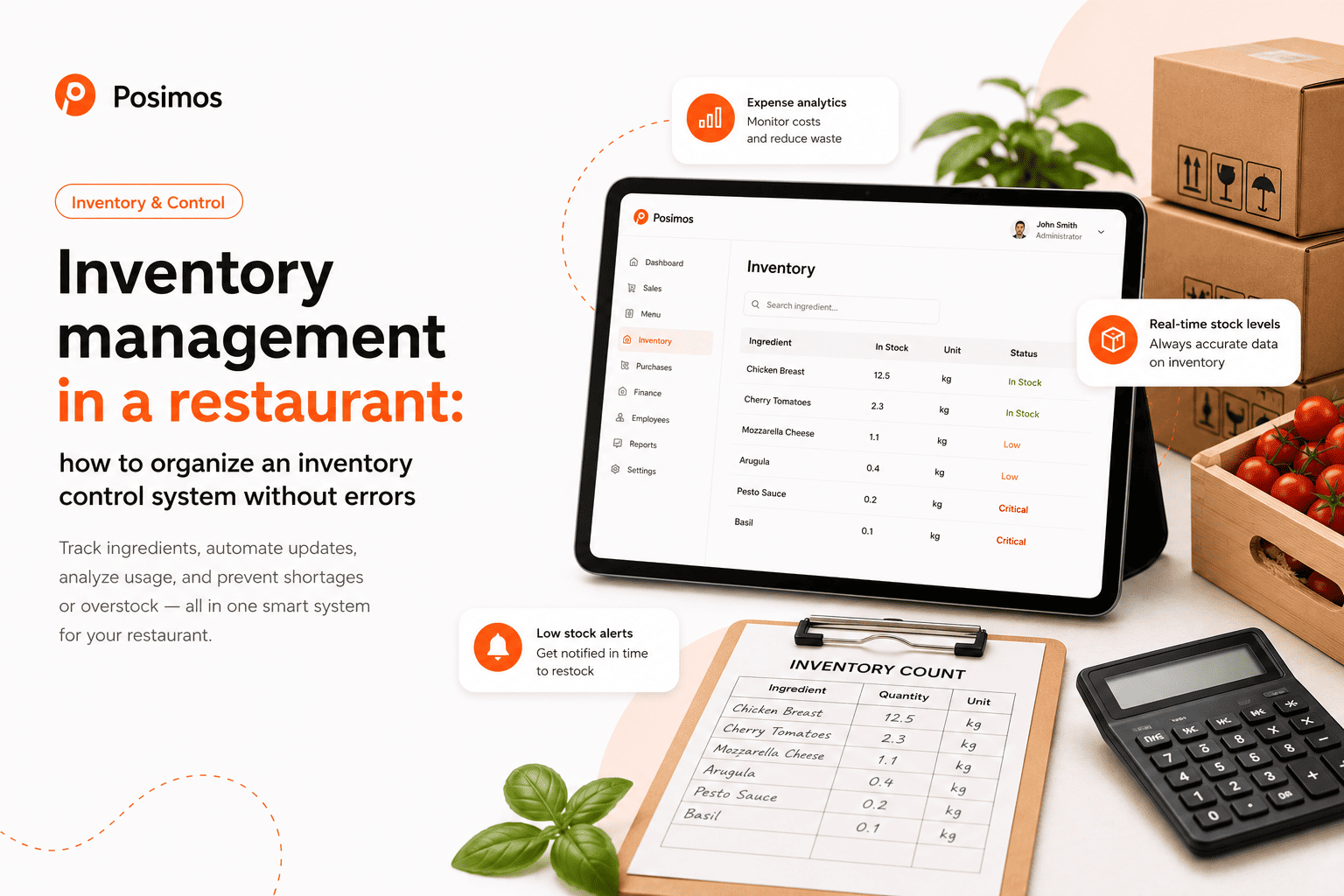
Modern POS systems can automatically:
- Track product sales
- Monitor inventory levels
- Record stock write-offs
- Generate inventory reports
- Forecast future demand
- Alert managers about potential shortages
As a result, restaurant owners always have access to accurate, real-time inventory data without relying on spreadsheets.
Common Mistakes When Using XYZ Analysis
Some of the most common mistakes include:
- Analyzing only one month of sales data.
- Ignoring seasonal demand fluctuations.
- Failing to update the analysis regularly.
- Applying the same purchasing strategy to all products.
- Not integrating XYZ analysis with inventory management software.
XYZ analysis should become a regular part of inventory management rather than a one-time exercise.
Conclusion
XYZ inventory analysis is a simple yet highly effective tool for improving restaurant stock management. By identifying products with stable, seasonal, and unpredictable demand, restaurants can optimize purchasing, reduce waste, minimize inventory costs, and ensure that essential ingredients are always available.
When combined with automated inventory management and a modern POS system, XYZ analysis helps restaurant owners make informed decisions based on real sales data, improving operational efficiency and overall profitability.
 Oleksii Andriiuk