 Oleksii Andriiuk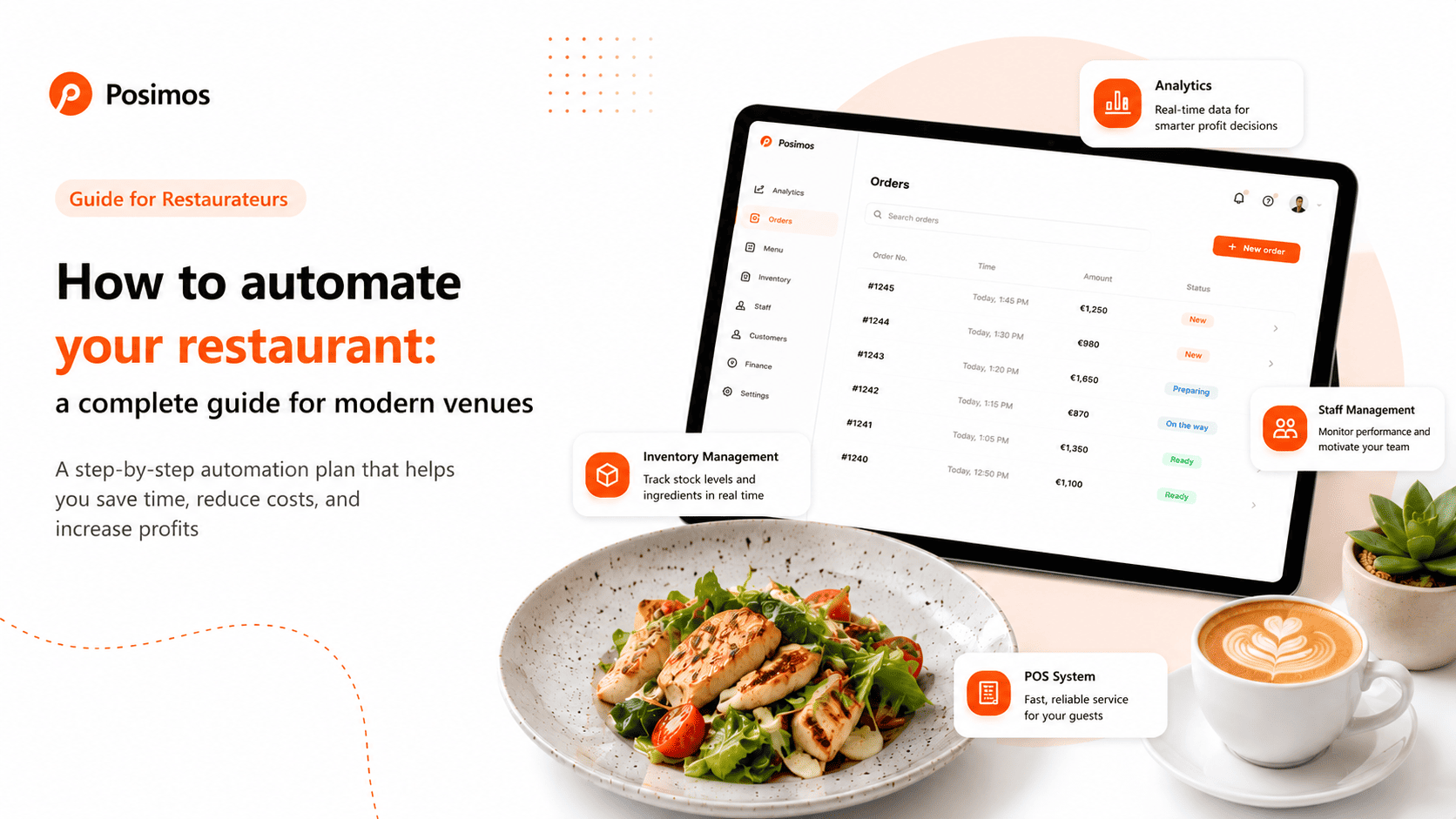
How to Automate a Restaurant: A Complete Guide for Modern Food Businesses
Running a successful restaurant today requires more than great food and excellent service. Efficient operations, accurate inventory management, and real-time business insights are essential for staying competitive. That's why restaurant automation has become a necessity rather than a luxury.
Modern POS systems help restaurant owners manage sales, inventory, purchasing, staff, and financial reports from a single platform, reducing manual work and improving overall efficiency.
In this guide, you'll learn what restaurant automation is, which processes can be automated, and how to choose the right solution for your business.
What Is Restaurant Automation?
Restaurant automation is the use of software to streamline and manage everyday business operations.
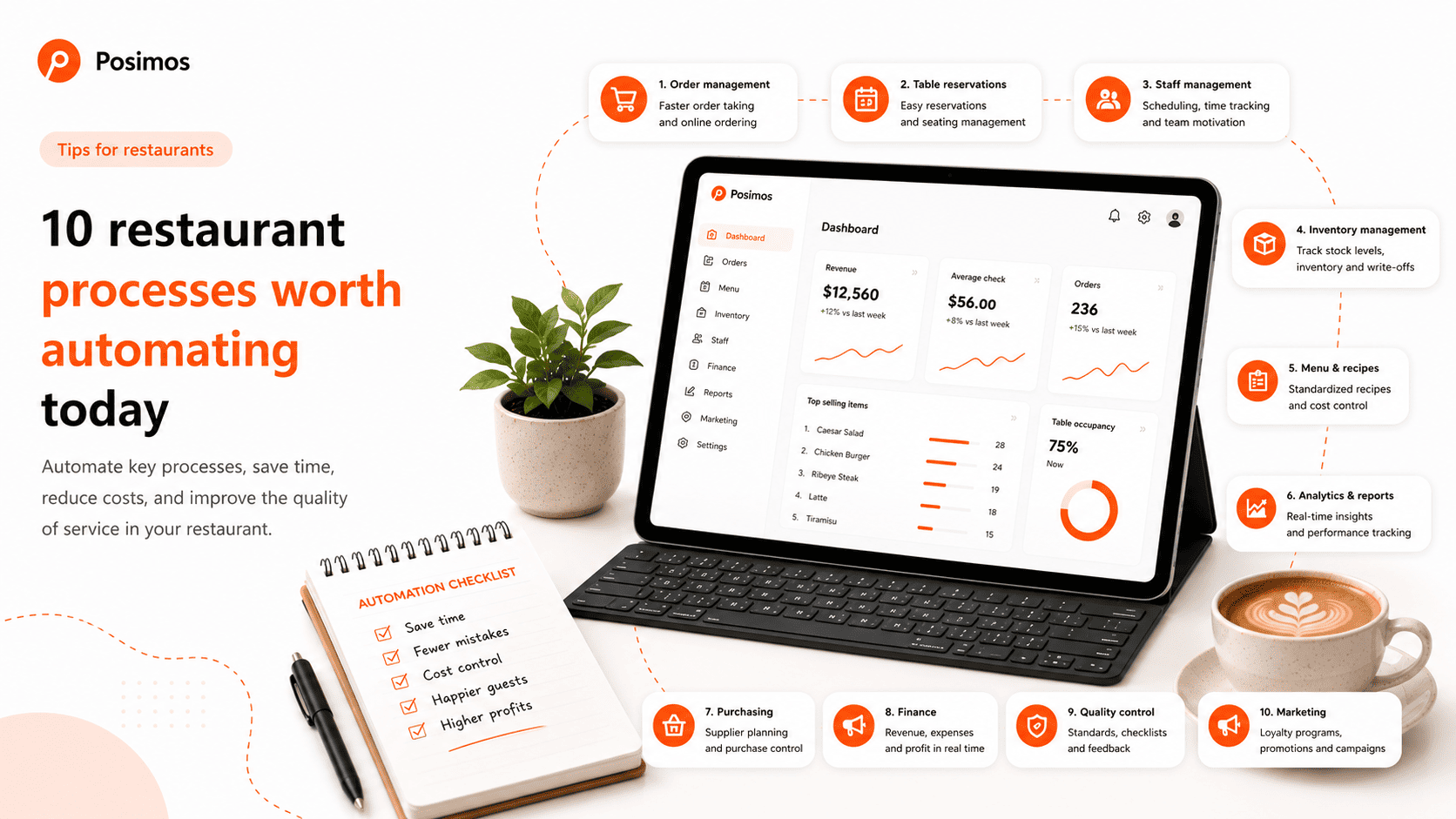
Instead of relying on spreadsheets, paper records, and manual calculations, restaurants can centralize all essential operations in one system, including:
- Sales
- Inventory management
- Purchasing
- Staff management
- Recipe and food cost management
- Financial reporting
- Stock audits
By automating these processes, restaurant owners gain accurate data and can make better business decisions based on real performance.
Which Restaurant Processes Can Be Automated?
Point of Sale (POS)
A modern POS system enables staff to process orders quickly, apply discounts, add modifiers, and accept multiple payment methods.
Benefits include:
- Faster order processing
- Fewer cashier mistakes
- Shorter waiting times
- Easier staff training
Inventory Management
Every completed sale automatically deducts ingredients based on predefined recipes.
Restaurant owners always know:
- Current stock levels
- Low-stock items
- Overstocked products
- Products that need to be reordered
This significantly improves inventory accuracy and reduces waste.
Purchasing
Automation makes purchasing more efficient by analyzing sales history and current inventory levels.
As a result, restaurants can:
- Prevent product shortages
- Avoid tying up cash in excess inventory
- Reduce spoilage and food waste
- Optimize purchasing decisions
Staff Management
Every employee action is recorded automatically.
Managers can monitor:
- Shift opening and closing
- Individual employee sales
- Refunds
- Order cancellations
- Complete activity history
This improves accountability and simplifies daily management.
Financial Analytics
Restaurant software provides detailed business insights, including:
- Revenue
- Profit
- Food cost
- Average order value
- Best-selling dishes
- Most profitable menu items
- Sales trends
Instead of spending hours creating reports manually, restaurant owners can access real-time analytics whenever they need them.
Benefits of Restaurant Automation
Complete Business Control
Cloud-based restaurant software allows owners to monitor operations remotely from a computer, tablet, or smartphone.
Whether you're at another location or on vacation, your business remains under control.
Fewer Human Errors
Automation reduces mistakes related to order processing, inventory management, stock deductions, and financial reporting.
Greater accuracy leads to lower operating costs.
Faster Customer Service
Quick order entry and seamless communication between the dining area and kitchen improve customer satisfaction while increasing table turnover.
Time Savings
Automation eliminates repetitive administrative tasks.
Managers spend less time on paperwork and more time improving customer experience and growing the business.
Lower Operating Costs
Accurate inventory tracking helps reduce:
- Overstocking
- Food waste
- Inventory shortages
- Unnecessary purchases
Even small improvements can have a significant impact on restaurant profitability.
When Should You Automate Your Restaurant?
It's probably time to automate if:
- You still manage inventory in Excel.
- You don't know your exact profit margins.
- Inventory shortages occur regularly.
- Stocktaking takes too much time.
- Staff performance is difficult to monitor.
- Purchasing decisions are based on estimates.
- You're planning to expand your business.
If several of these situations sound familiar, automation can help solve them.
How to Choose the Right POS System
When selecting restaurant software, consider the following features.
Easy-to-Use Interface
Staff should be able to learn the system quickly without lengthy training.
Cloud Access
You should have secure access to your business data from anywhere.
Automatic Inventory Deduction
Every sale should automatically update inventory based on recipe ingredients.
Recipe Management
Recipe management is essential for calculating food costs accurately and maintaining consistency.
Advanced Analytics
Choose software that provides detailed reports on revenue, profit, food cost, inventory, employee performance, and sales trends.
Common Restaurant Automation Mistakes
Many restaurants fail to get the full benefits of automation because they:
- Choose software based only on price.
- Skip recipe setup.
- Ignore regular inventory counts.
- Don't train employees properly.
- Use multiple disconnected systems instead of one integrated solution.
Proper implementation is just as important as choosing the right software.
Conclusion
Restaurant automation helps businesses operate more efficiently, reduce costs, improve customer service, and make smarter decisions through accurate data.
A modern POS system combines sales, inventory management, purchasing, financial reporting, and staff management into one platform, giving restaurant owners complete visibility over their operations.
Whether you run a small café or a multi-location restaurant, investing in automation is one of the most effective ways to improve profitability and support long-term growth.