 Oleksii Andriiuk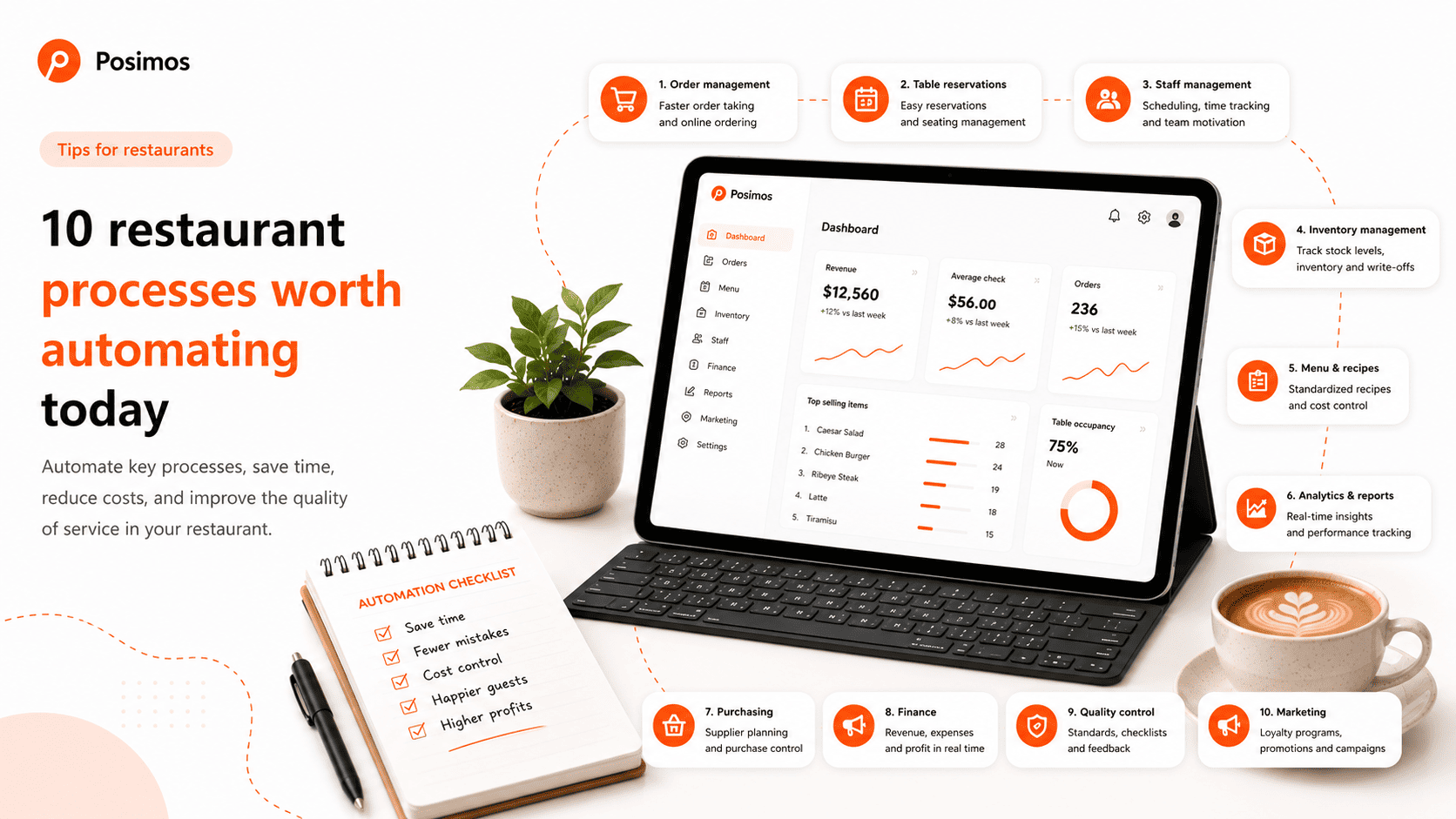
1. Order Management
The customer experience begins the moment an order is placed. Manual order taking can lead to incorrect items, missing modifications, and communication issues between the front-of-house staff and the kitchen.
A modern restaurant POS system allows servers to enter orders directly from a tablet or POS terminal. Orders are instantly sent to the kitchen, eliminating handwritten tickets and reducing communication errors.
Benefits of automating order management
- Faster order processing
- Fewer human errors
- Improved customer satisfaction
- Reduced waiting times
2. Kitchen Operations
Paper tickets can easily become disorganized during busy hours, slowing food preparation and increasing the chance of mistakes.
A Kitchen Display System (KDS) replaces paper tickets with digital screens that display incoming orders in real time. Kitchen staff can clearly see priorities, preparation times, and order status.
Benefits
- Better kitchen organization
- Faster food preparation
- Fewer missed or incorrect orders
- Improved communication between staff
3. Inventory Management
Food costs represent one of the largest expenses in the restaurant industry. Without proper inventory control, restaurants often experience waste, over-ordering, or unexpected shortages.
Automated inventory management tracks ingredient usage in real time and updates stock levels automatically after every sale.
Advantages
- Accurate inventory tracking
- Automatic ingredient deductions
- Better purchasing decisions
- Reduced food waste
- Improved cost control
4. Inventory Audits
Manual inventory counts require significant time and often result in inaccurate records.
An automated inventory system simplifies audits by comparing actual stock with system data, making discrepancies easier to identify.
Key benefits
- Faster inventory counts
- Greater accuracy
- Reduced product losses
- Better financial control
5. Staff Management
Managing employees efficiently is essential for every restaurant.
Automation makes it easier to monitor working hours, schedule shifts, evaluate employee performance, and track sales by individual staff members.
Restaurant management software can automatically record:
- Employee working hours
- Shift schedules
- Sales performance
- Attendance records
This provides managers with valuable insights while reducing administrative work.
6. Payment Processing
Today's customers expect flexible payment options.
Modern POS systems support multiple payment methods, including:
- Credit and debit cards
- Contactless payments
- Apple Pay
- Google Pay
- QR code payments
- Cash
Benefits
- Faster checkout process
- Fewer payment errors
- Automatic transaction recording
- Better customer experience
7. Customer Loyalty Programs
Retaining existing customers is significantly more cost-effective than constantly acquiring new ones.
Restaurant automation software allows businesses to create personalized loyalty programs that encourage repeat visits.
Examples include:
- Reward points
- Digital loyalty cards
- Birthday promotions
- Personalized discounts
- Special offers for returning customers
Customer purchase history is stored automatically, making targeted marketing campaigns much easier.
8. Online Ordering and Delivery
Online food ordering continues to grow every year.
Integrating your POS system with your website, mobile app, or third-party delivery platforms allows orders to be received automatically without manual entry.
Advantages
- Faster order processing
- Reduced manual work
- Fewer order mistakes
- Improved delivery management
9. Sales Analytics
Successful restaurant management depends on reliable business data.
Restaurant analytics provide valuable insights into business performance through real-time reports.
Managers can monitor:
- Daily revenue
- Average order value
- Customer traffic
- Best-selling menu items
- Peak business hours
- Employee performance
- Profitability by menu category
These insights help restaurant owners make informed business decisions and identify opportunities for growth.
10. Financial Management
Financial visibility is one of the most important aspects of running a restaurant.
Automation centralizes financial information, making it easier to monitor business performance at any time.
Restaurant owners gain access to:
- Daily sales reports
- Revenue tracking
- Expense monitoring
- Cash flow analysis
- Profit margins
- Financial summaries
Cloud-based systems also allow business owners to monitor their restaurant remotely from any device.
Why Restaurant Automation Matters
The restaurant industry has become increasingly competitive. Customers expect fast service, accurate orders, convenient payment options, and consistent experiences every time they visit.
Restaurant automation reduces repetitive tasks, minimizes human error, improves communication between staff, and provides restaurant owners with complete visibility into daily operations.
Instead of spending hours on administrative work, managers can focus on improving customer service, growing their business, and increasing profitability.
How Posimos Helps Automate Your Restaurant
Posimos is a modern restaurant POS system designed to simplify restaurant operations through a single, integrated platform.
With Posimos, restaurants can:
- Manage orders efficiently
- Organize kitchen operations
- Track inventory automatically
- Monitor employee performance
- Accept multiple payment methods
- Launch customer loyalty programs
- Analyze sales performance
- Monitor financial reports in real time
Whether you operate a restaurant, café, bar, or fast-food business, Posimos provides the tools needed to streamline operations and improve overall business performance.
Conclusion
Restaurant automation is no longer a luxury—it has become a necessity for businesses that want to remain competitive in today's hospitality industry.
By automating essential processes such as order management, kitchen operations, inventory control, payment processing, and business analytics, restaurants can reduce costs, improve efficiency, and deliver a better experience for every customer.
Investing in a reliable restaurant management solution like Posimos helps restaurant owners save time, increase profitability, and build a stronger foundation for long-term growth.