 Oleksii Andriiuk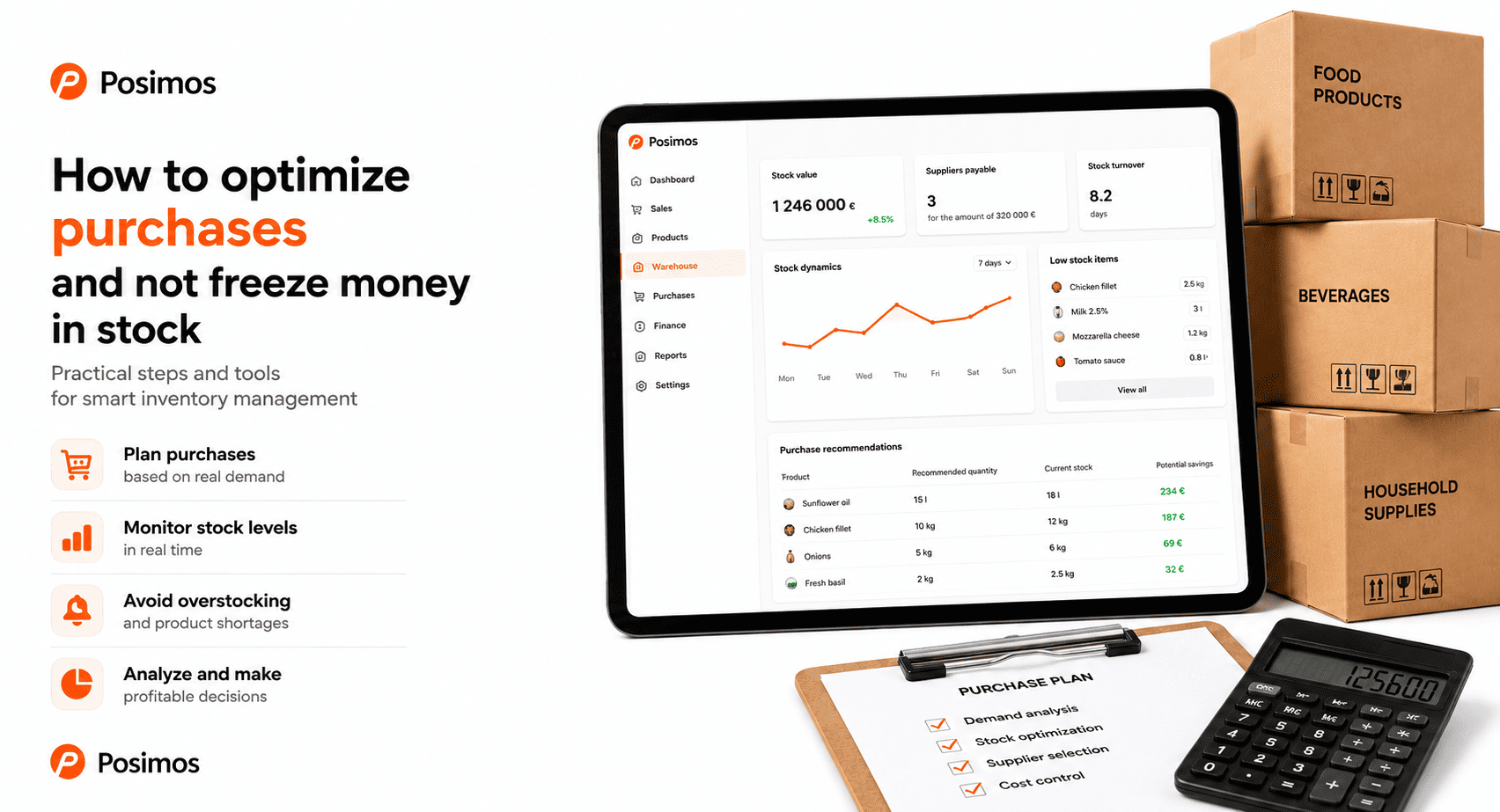
Why Excess Inventory Is Hidden Profit Loss
Many restaurant owners believe that keeping large amounts of stock guarantees smooth operations. In reality, excessive inventory often creates more problems than it solves.
First, the money invested in inventory becomes unavailable for other business needs. Second, fresh ingredients such as meat, seafood, dairy products, fruits, and vegetables have limited shelf lives, increasing the risk of spoilage. Large inventories also make stock management more complicated, slow down inventory counts, and increase the likelihood of operational errors.
Every unnecessary box of ingredients represents capital that could instead be invested in marketing, equipment upgrades, staff training, or business expansion.
Signs You're Ordering More Than Your Restaurant Needs
If you regularly notice the following situations, it's probably time to review your purchasing strategy:
- Products frequently expire before they are used.
- Storage areas are constantly overcrowded.
- Employees struggle to locate ingredients.
- Inventory counts consistently reveal excessive stock.
- Orders are placed "just in case."
- Some ingredients remain unused for weeks or even months.
These are clear indicators that purchasing decisions are based on assumptions rather than actual business data.
Use Sales Data Instead of Guesswork
One of the most common purchasing mistakes is ordering products based on intuition. Successful restaurants rely on sales data instead.
Before placing a new order, analyze:
- Which menu items sell the most.
- Which ingredients are used most frequently.
- Which products move slowly.
- Seasonal demand trends.
- Sales performance over recent weeks and months.
This approach allows restaurants to purchase only the products they truly need.
Set Minimum and Maximum Inventory Levels
Every ingredient should have two inventory thresholds:
- Minimum stock level — the quantity at which a new order should be placed.
- Maximum stock level — the quantity that should never be exceeded.
Using minimum and maximum stock levels helps prevent both shortages and unnecessary overstocking.
Plan Purchases Around Business Activity
Purchasing volumes should reflect actual restaurant demand.
Customer traffic often increases during weekends, holidays, and special events, while weekdays may require fewer ingredients. When planning purchases, consider:
- Seasonal demand.
- Best-selling menu items.
- Upcoming events.
- Marketing campaigns and promotions.
- Historical sales data.
The more accurate your demand forecasting is, the less cash will remain tied up in inventory.
Automate Inventory Management
Managing inventory manually often leads to mistakes, duplicate orders, and inaccurate stock information.
A modern POS system allows you to:
- Monitor inventory levels in real time.
- Automatically deduct ingredients after every sale.
- Track inventory movements.
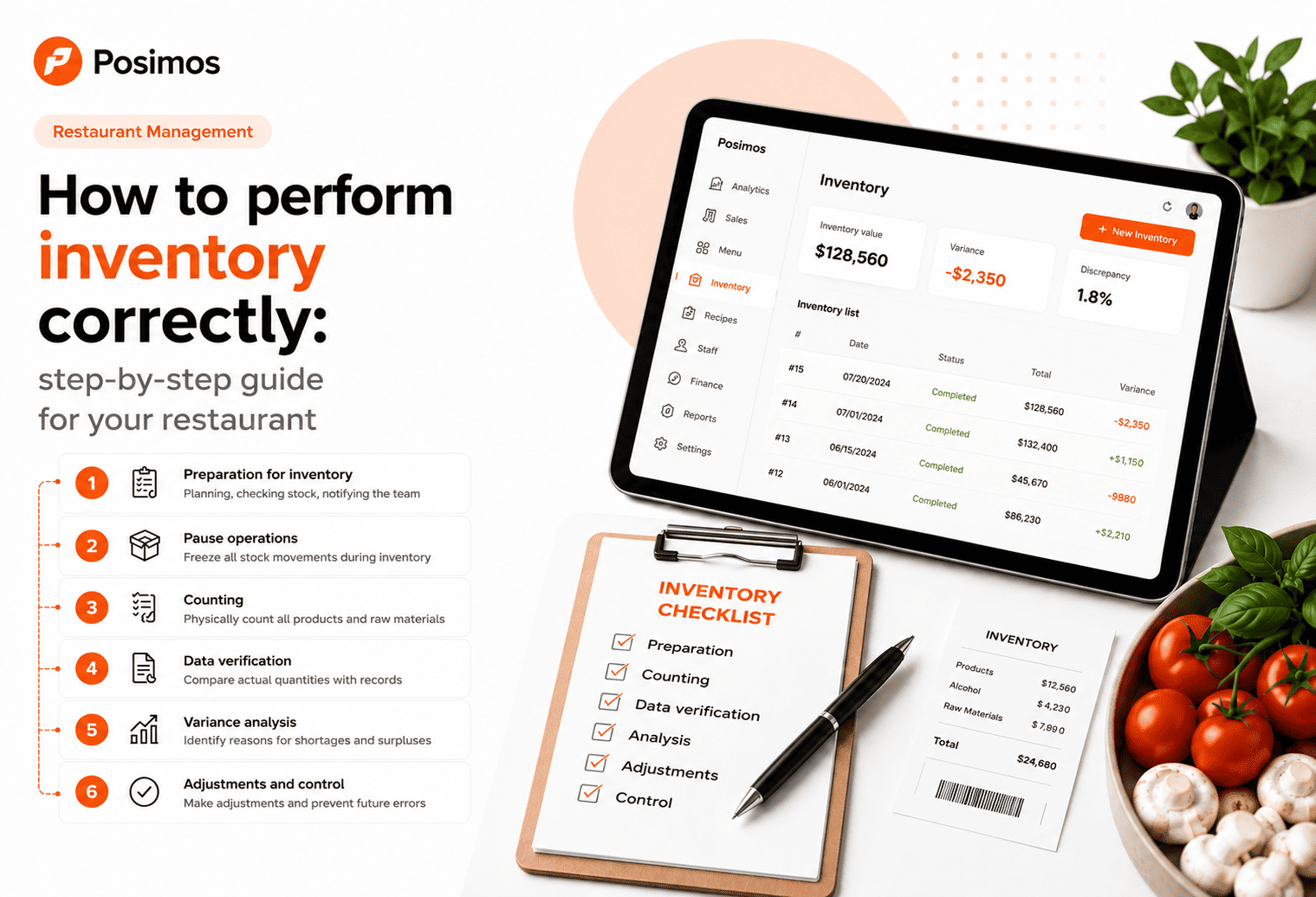
- Perform inventory counts more efficiently.
- Review purchasing history.
- Generate detailed inventory usage reports.
For example, with Posimos, restaurant owners can instantly view current stock levels, ingredient consumption, and inventory history. This allows purchasing decisions to be based on accurate data instead of assumptions.
Build Better Relationships with Suppliers
Optimizing purchasing isn't only about managing inventory—it also involves working effectively with suppliers.
When choosing suppliers, consider:
- Delivery reliability.
- Minimum order quantities.
- Delivery schedules.
- The possibility of receiving smaller but more frequent deliveries.
- Flexible purchasing terms.
In many cases, receiving smaller deliveries several times a week is more profitable than filling your storage with products that may spoil before they're used.
Perform Inventory Counts Regularly
Even the best purchasing strategy won't be effective without regular inventory checks.
Routine inventory counts help you:
- Detect shortages.
- Identify excess stock.
- Measure actual ingredient consumption.
- Improve future purchasing decisions.
- Reduce unnecessary financial losses.
Inventory should be conducted regularly rather than only at the end of an accounting period.
Common Purchasing Mistakes
Restaurants often lose money because of these common mistakes:
- Buying excessive quantities "just in case."
- Ignoring sales analysis.
- Managing inventory manually.
- Performing inventory counts too infrequently.
- Purchasing without demand forecasting.
- Depending on only one supplier without comparing alternatives.
- Failing to monitor product expiration dates.
Most of these problems can be eliminated through automation and consistent data analysis.
Conclusion
Optimizing restaurant purchasing isn't about buying less—it's about buying smarter. When restaurants purchase only what they actually need, they reduce wasted inventory, improve cash flow, minimize spoilage, and increase profitability.
By combining inventory automation, sales analytics, regular stock monitoring, and consistent inventory management, restaurant owners can make better purchasing decisions, reduce unnecessary expenses, and build a stronger, more financially stable business.