1. Sales Report
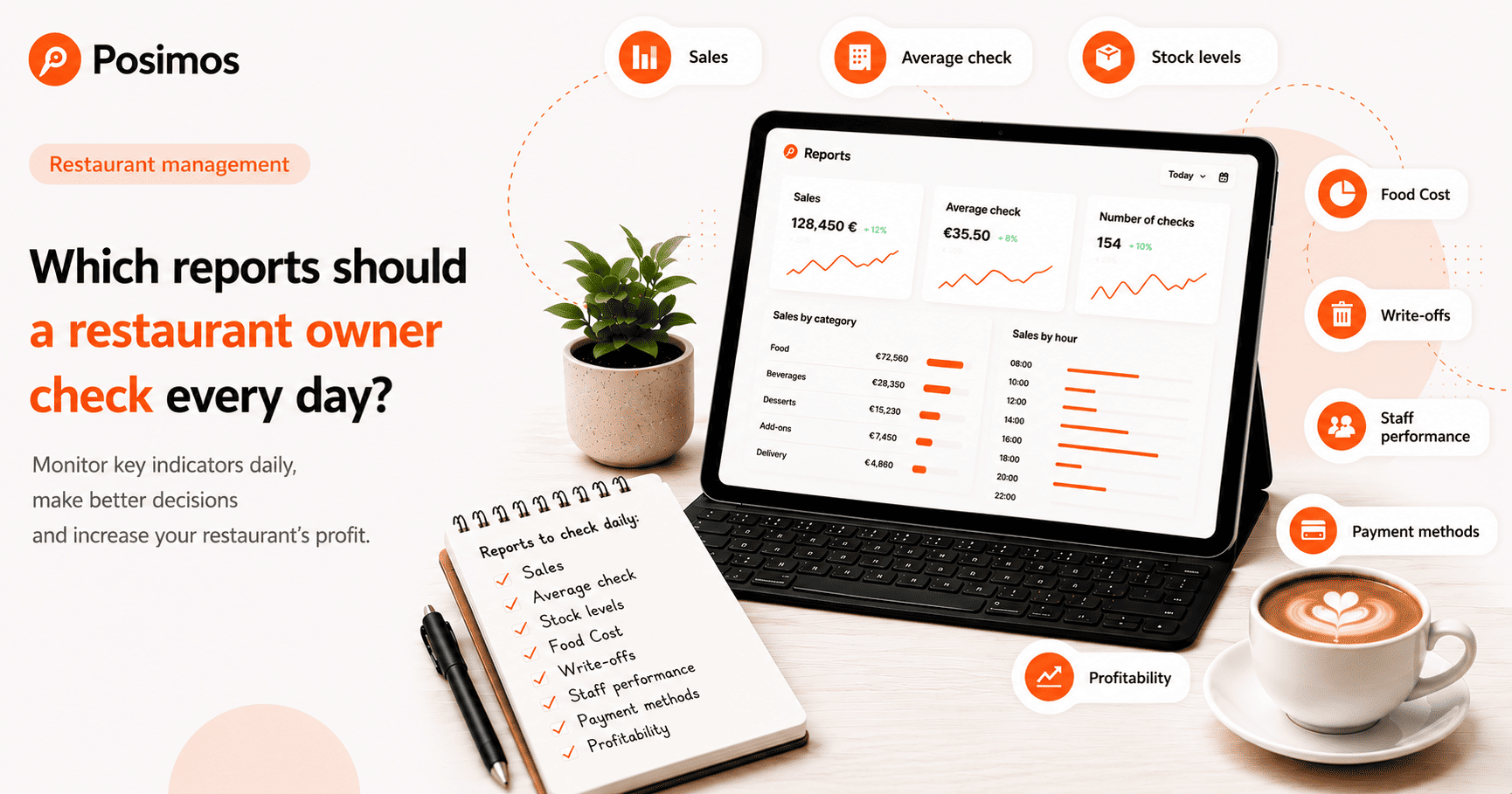
The sales report provides a complete overview of your restaurant's daily performance.
Instead of focusing only on total revenue, compare today's results with previous days, weeks, or the same period last month to identify trends.
A daily sales report should include:
- Total revenue
- Number of orders
- Average check value
- Sales by hour
- Sales by menu category
- Best-selling menu items
If revenue suddenly drops or customer traffic changes significantly, this report will help you quickly identify the issue.
2. Average Check Report
Increasing the average check is often more profitable than simply attracting more customers.
If guest traffic remains stable but the average check decreases, it may indicate:
- Poor upselling performance
- Ineffective service
- Changes in customer purchasing behavior
- A higher share of lower-priced menu items
Monitoring this metric daily helps evaluate both staff performance and promotional campaigns.
3. Staff Performance Report
Every server contributes directly to your restaurant's revenue.
A daily performance report allows you to compare employees based on:
- Total sales
- Average check
- Number of completed orders
- Upselling performance
- Overall productivity
These insights make it easier to recognize top performers and identify employees who may benefit from additional training.
4. Kitchen Performance Report
A successful restaurant depends not only on great service but also on an efficient kitchen.
Review the following metrics every day:
- Number of completed orders
- Average preparation time
- Peak production hours
- Delayed orders
If food preparation consistently takes longer than expected, customer satisfaction will eventually decline.
5. Inventory Report
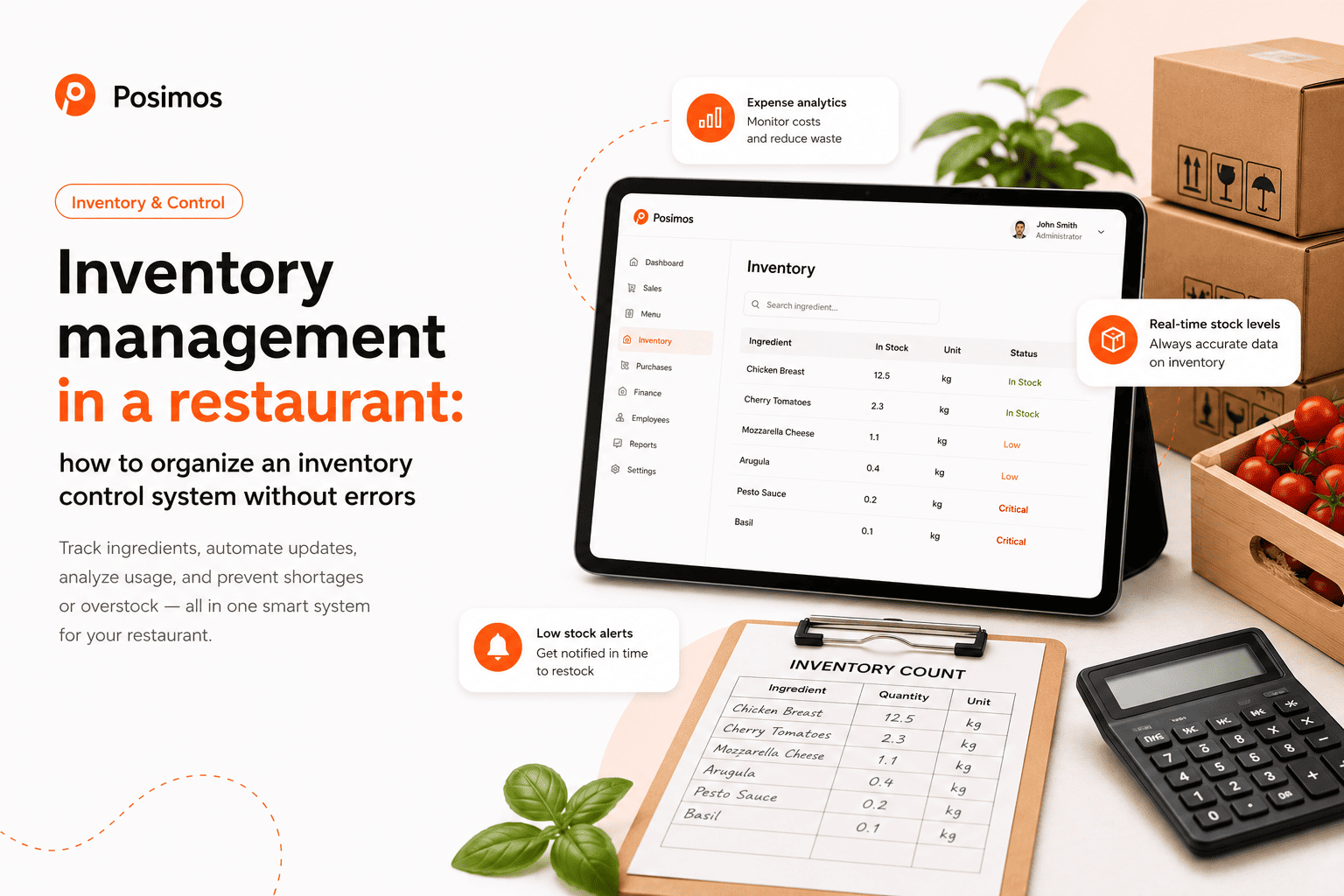
Sales alone don't tell the full story. Inventory management is equally important.
A daily inventory report should include:
- Current stock levels
- Low-stock products
- Critical inventory alerts
- Products approaching their expiration dates
Regular inventory monitoring helps prevent stock shortages and reduces the risk of running out of key ingredients during service.
6. Waste and Write-Off Report
Food waste is one of the largest hidden expenses in the restaurant industry.
Reviewing daily write-offs helps identify:
- Expired products
- Kitchen waste
- Staff mistakes
- Possible inventory discrepancies
If waste levels continue to increase, it may indicate purchasing problems, poor storage practices, or inefficient food preparation.
7. Food Cost Report
Food cost is one of the most important financial indicators for any restaurant.
It measures how much of your revenue is spent on ingredients.
An increase in food cost may result from:
- Rising supplier prices
- Incorrect inventory deductions
- Failure to follow recipes
- Excessive ingredient usage
Tracking food cost every day helps maintain healthy profit margins and keeps expenses under control.
8. Voids and Refunds Report
Every canceled order or refunded transaction should have a valid reason.
A growing number of voids may indicate:
- Order entry mistakes
- Service errors
- Kitchen issues
- Potential employee fraud
Daily monitoring of canceled orders helps maintain operational transparency and reduce financial losses.
9. Payment Report
A daily payment report ensures that all financial transactions are properly recorded.
It should include:
- Cash payments
- Credit and debit card payments
- Online payments
- Gift card transactions
- Loyalty program payments
Unexpected differences between payment methods may indicate technical problems or accounting errors that require immediate attention.
10. Profitability Report
Many restaurant owners focus only on sales, but high revenue doesn't always translate into high profit.
A daily profitability report should include:
- Gross profit
- Operating expenses
- Food costs
- Estimated net profit
This report provides a clear picture of your restaurant's financial health and helps you make smarter business decisions.
How to Automate Daily Report Analysis
Preparing reports manually in spreadsheets can be time-consuming and increases the risk of human error.
A modern POS system automatically collects business data in real time and generates detailed reports without additional effort. Restaurant owners can monitor sales, inventory, food cost, average check, waste, and staff performance from a computer, tablet, or smartphone—whether they're in the restaurant or managing the business remotely.
Automated reporting saves time, improves accuracy, and allows managers to react quickly whenever something requires attention.
Conclusion
Reviewing key reports every day is one of the most effective habits a restaurant owner can develop. By consistently monitoring sales, average check, inventory, food cost, waste, staff performance, and profitability, you can detect problems early, reduce unnecessary expenses, improve operational efficiency, and increase overall profitability.
With a modern POS system, all of these reports are available in one place and updated in real time. The faster you gain access to reliable business data, the faster you can make informed decisions that help your restaurant grow and succeed.
 Oleksii Andriiuk