 Oleksii Andriiuk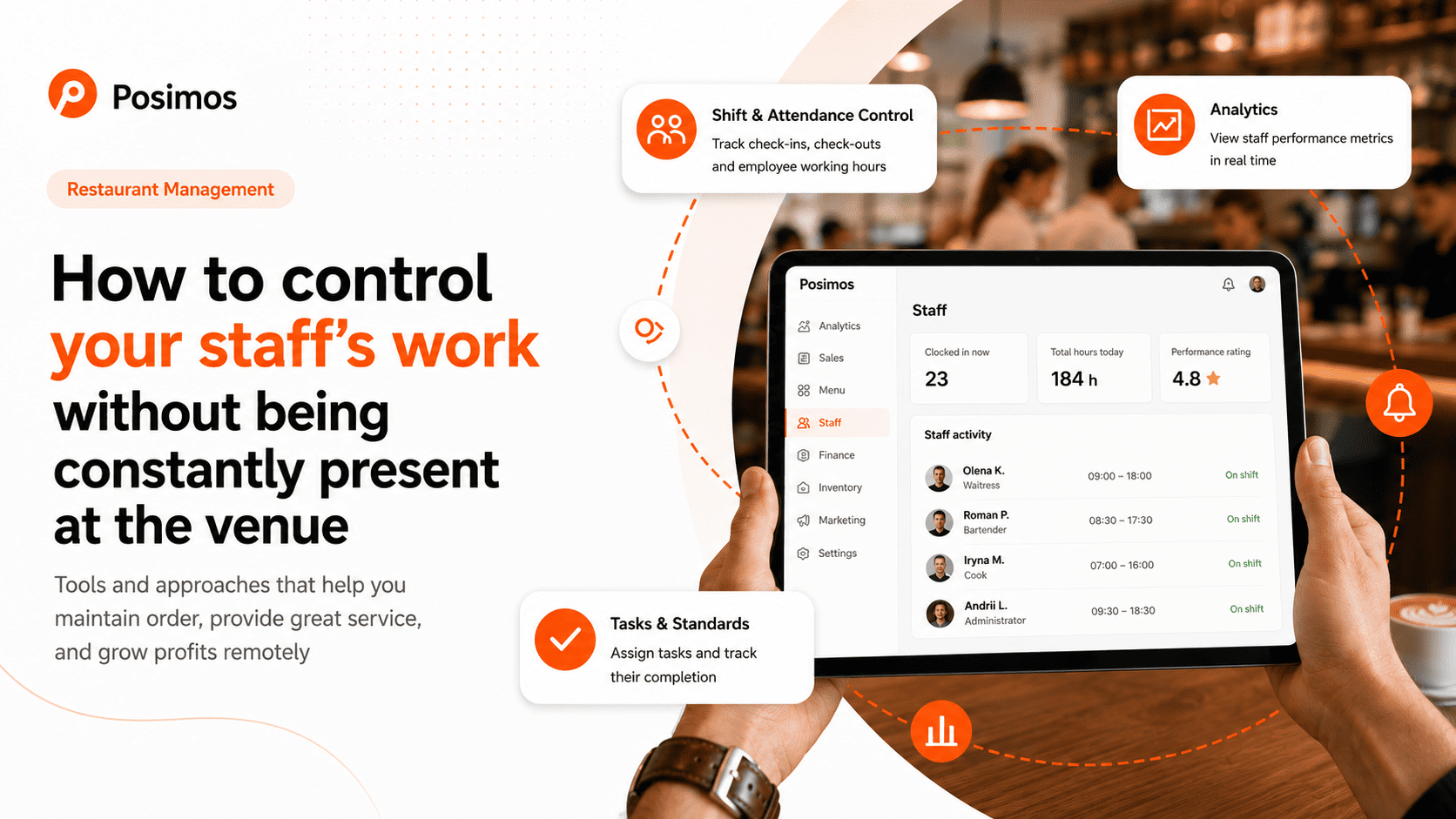
Why Being on Site Doesn't Guarantee Better Control
Many restaurant owners believe that the more time they spend in their establishment, the smoother everything runs. While employees may indeed be more attentive when the owner is present, this approach only solves the problem temporarily.
As soon as the owner leaves, service quality may decline, procedures may be ignored, and operational mistakes can begin to appear.
The real issue isn't the staff—it's the lack of a structured management system. When restaurant operations are standardized and transparent, the business should perform consistently regardless of whether the owner is physically present.
What You Should Monitor Every Day
Effective management begins with tracking business performance rather than constantly watching employees.
Key metrics worth reviewing daily include:
- Daily revenue
- Number of transactions
- Average order value
- Product returns
- Cancelled orders
- Inventory write-offs
- Current stock levels
- Shift opening and closing reports
- Cashier activity
- Order preparation and service speed
Unexpected changes in any of these indicators may signal operational issues that require attention.
Automation Is the Foundation of Modern Restaurant Management
It is impossible to personally supervise every employee throughout the day. Instead, successful restaurants rely on automation to monitor operations.
A modern POS system allows you to:
- Track sales in real time
- Monitor every cash register transaction
- Control inventory write-offs
- Keep stock levels up to date
- Generate detailed business reports
- Evaluate employee performance
- Detect unusual or suspicious activities quickly
For example, with Posimos, restaurant owners can monitor key business indicators remotely, whether they're working from home, traveling, or managing multiple locations. This makes it easier to identify problems early and make informed business decisions based on real data.
Signs Your Restaurant Depends Too Much on the Owner
If several of these situations sound familiar, it's probably time to improve your management system:
- Revenue decreases whenever you're away.
- Managers frequently call you with operational questions.
- Employees stop following service standards.
- Inventory counts regularly reveal discrepancies.
- Business performance is difficult to track in real time.
- Every important decision depends on the owner.
Over time, this management style limits business growth and makes expansion much more difficult.
How to Build an Effective Staff Management System
Creating a business that runs smoothly without constant supervision requires clear processes and consistent standards.
1. Standardize Your Operations
Every employee should understand their responsibilities, daily procedures, and customer service standards.
2. Automate Business Operations
Manual record-keeping increases the risk of mistakes. Automation provides accurate, real-time information without additional effort.
3. Set Employee Access Permissions
Employees should only have access to the tools and information necessary for their specific roles.
4. Review Reports Regularly
Instead of constantly monitoring the restaurant floor, analyze your operational reports and investigate unusual trends.
5. Monitor Inventory Closely
Regular inventory control helps prevent shortages, unnecessary write-offs, and stock discrepancies.
6. Measure Employee Performance
Evaluate staff using objective performance indicators rather than personal impressions.
Common Mistakes Restaurant Owners Make
Many operational problems stem from the following management habits:
- Micromanaging every employee
- Operating without clear procedures
- Relying on manual inventory management
- Trusting processes without verification
- Ignoring business analytics
- Reacting too late when problems arise
Rather than trying to supervise every person, focus on building systems that quickly reveal issues before they affect your profitability.
Conclusion
Successful restaurant management doesn't require the owner to spend every day on-site. The most efficient businesses rely on standardized processes, transparent operations, and automation rather than constant supervision.
When key business metrics are available in real time and staff performance is supported by reliable management tools, owners gain the freedom to focus on growing their business, improving customer experience, and expanding to new locations instead of solving everyday operational issues.
That's how modern restaurants become businesses that thrive—even when the owner isn't there.